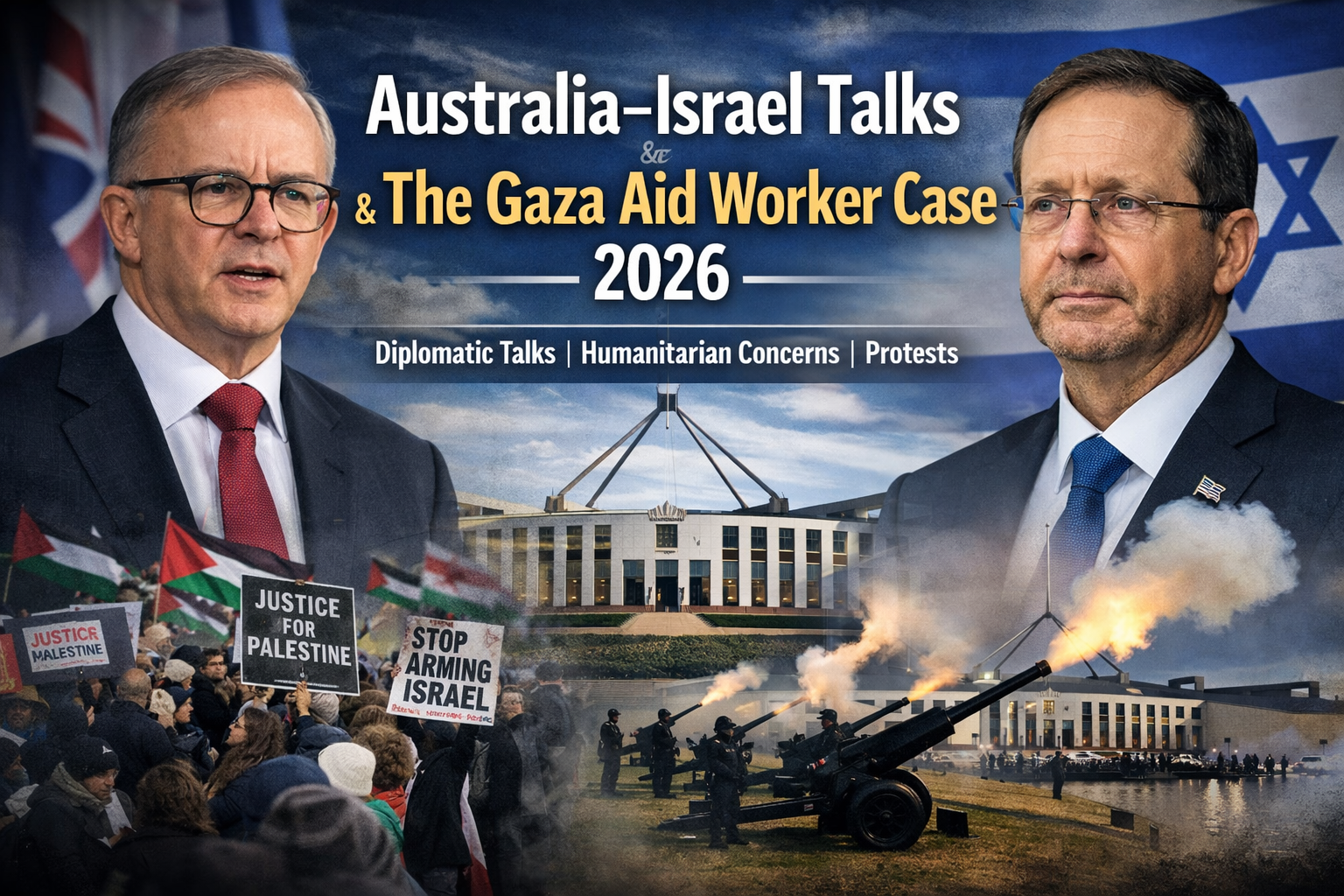
Australia’s Prime Minister Anthony Albanese has told Israeli President Isaac Herzog that Australia expects transparency and accountability over the death of Australian aid worker Zomi Frankcom, who was killed in Gaza in April 2024 during an Israeli military strike.
The president’s visit to Canberra was marked by diplomatic discussions, security measures, and protests outside Parliament House. While the meeting focused on bilateral relations and rising antisemitism concerns, the conversation also highlighted Australia’s expectation of a transparent investigation and appropriate accountability regarding the incident.
Beyond the diplomatic exchange, this development carries broader implications for humanitarian work, government policy careers, international security roles, and global employment trends.
Diplomatic Tensions and Government Policy Careers
When high-level diplomatic discussions occur between nations, they often lead to increased activity within:
Foreign affairs departments
International policy advisory roles
Diplomatic support and embassy services
Geopolitical risk analysis
Defence and security consulting
Australia’s formal objection to the expansion of settlements in the West Bank reinforces the country’s continued support for a two-state solution and international legal norms. These positions require skilled professionals in international law, policy research, compliance, and global relations.
For students and graduates studying political science, international relations, law, or public administration, such global events often signal long-term career demand within public institutions and research organisations.
Impact on Humanitarian and NGO Employment
The tragic death of an Australian humanitarian worker has once again drawn attention to the risks faced by aid professionals operating in conflict zones.
This may lead to stronger recruitment focus in areas such as:
Humanitarian logistics and operations
Crisis management and emergency coordination
NGO compliance and safety oversight
International development management
Risk and security advisory services
Organisations operating in high-risk regions often expand recruitment for experienced professionals who can manage operational safety and regulatory compliance effectively.
For jobseekers interested in humanitarian careers, qualifications in international development, security management, or disaster response may become increasingly valuable.
Corporate and Global Business Implications
Geopolitical instability frequently affects global markets and corporate strategy. When diplomatic tensions rise, multinational organisations often review:
Supply chain exposure
Risk management frameworks
Insurance and compliance policies
Global trade relationships
This can generate hiring demand in:
Risk management consulting
International logistics coordination
Compliance and regulatory advisory roles
Corporate security divisions
Australian employers operating globally may increase hiring in compliance and policy monitoring roles to adapt to changing international conditions.
Workplace Climate and Inclusion Roles
During his visit, President Herzog emphasised the importance of combating antisemitism. At the same time, public protests in Canberra highlighted broader social tensions related to the conflict.
When global events influence domestic discourse, organisations often strengthen their focus on:
Diversity and inclusion officers
Workplace relations specialists
HR compliance advisors
Community engagement managers
Large employers increasingly prioritise maintaining inclusive work environments and ensuring balanced internal communication during sensitive international events.
Opportunities for Students and Early Career Professionals
Students in the following disciplines should closely observe developments of this scale:
International relations
Public policy
Law
Journalism
Security studies
Global business
Global diplomatic issues frequently create indirect career growth in:
Policy analysis
International reporting
NGO project coordination
Government advisory positions
Corporate geopolitical research
Understanding how global political shifts influence hiring trends gives jobseekers a competitive advantage.
A Broader Employment Perspective
While the diplomatic visit has drawn both political attention and public protest, it also serves as a reminder that global conflicts reshape workforce priorities.
Humanitarian operations, government diplomacy, security oversight, corporate compliance, and diversity management all respond to international developments.
For employers, this means reassessing operational risk and workforce planning.
For jobseekers, it means identifying emerging sectors influenced by global policy changes.
Major international developments often increase demand in policy research, security analysis, humanitarian coordination, compliance, and geopolitical risk advisory roles.
Degrees in international relations, law, public policy, security studies, international development, and global business are highly relevant.
Monitor global trends, build cross-border skills, gain certifications in compliance or risk management, and apply through trusted recruitment platforms.
International tensions can impact supply chains, compliance requirements, trade policies, and corporate risk exposure, affecting workforce planning.
Risk management specialists, compliance advisors, policy analysts, security consultants, and diversity officers often become priority hires.
By strengthening governance frameworks, enhancing compliance teams, and maintaining transparent communication with employees and stakeholders.
Aid organisations may expand hiring in crisis logistics, safety coordination, and international development management.
Government services, defence consulting, international trade advisory, journalism, corporate compliance, and global logistics sectors.
Understanding global policy shifts helps professionals anticipate hiring trends and position themselves in expanding sectors early.