See jobs we've picked just for you










Australia’s Hiring Market Is Entering a New Skills Era
Australia’s hiring market is changing again. The latest labour market updates show that job opportunities are still active, but the way employers are hiring is becoming more selective, skills-focused and technology-driven.For employers, this means hiring is no longer only about filling empty roles quickly. Businesses now need candidates who can bring practical skills, digital confidence, reliability and adaptability. For job seekers, this means simply applying for every available job is not enough. Candidates need to show clear skills, relevant experience and a strong understanding of what employers need.According to the Australian Bureau of Statistics, total job vacancies reached 337,900 in February, up 2.7% from November. Private sector vacancies were 299,000, showing that businesses are still actively looking for workers across different industries.At the same time, the labour market is becoming more competitive. The ABS reported that Australia’s unemployment rate rose to 4.5% in April, while youth unemployment increased to 11.1%. This shows that while jobs are available, more people are also competing for suitable opportunities.This mix of active vacancies and rising competition creates an important message: the future of hiring will favour people and businesses that focus on skills, visibility and better matching.Why the Hiring Market Is ChangingThe Australian job market is being shaped by several forces at the same time. Skills shortages are still present in many industries, but employers are also becoming more cautious about who they hire. Businesses want candidates who can contribute quickly and adapt to changing workplace needs.Jobs and Skills Australia continues to track occupation shortage pressures through its Occupation Shortage List, which is based on employer recruitment experiences. The latest updates show that shortage pressures remain an important issue for workforce planning.This matters because hiring pressure is not the same in every sector. Some industries may have many applicants, while others still struggle to find skilled workers. For example, trades, health, education, construction, technology, logistics and care-related roles continue to receive strong attention because they support essential services and long-term economic needs.For employers, this means job advertising must be more targeted. A general job post may not attract the right candidates. A clear job post that explains skills, duties, location, salary range where possible and career value is more likely to reach suitable applicants.For job seekers, this means career preparation must become more focused. A resume should not only list previous jobs. It should clearly show skills, tools, achievements, certifications and practical experience.AI Is Becoming a Bigger Part of HiringAnother major change is the growth of artificial intelligence in recruitment and workplace operations. AI is affecting how employers screen applicants, write job descriptions, manage workflows and identify skills.Indeed’s Australian hiring trends report noted that demand for AI-related skills has continued to grow, with 5.8% of Australian job postings mentioning AI in job descriptions at the end of December, double the rate from a year earlier.This does not mean every job seeker must become an AI engineer. It means digital confidence is becoming useful across many roles. Employers increasingly value candidates who can work with modern tools, understand automation and adapt to new systems.For office roles, this may include using digital platforms, reporting tools, CRM systems or AI-supported productivity tools. For marketing roles, it may include content tools, analytics, automation and campaign platforms. For technical roles, it may include data, cloud, cybersecurity, software tools or AI-related systems.Even in non-technical industries, digital skills are becoming important. A candidate who can learn systems quickly, communicate clearly and solve problems practically may stand out more than someone who only meets the basic job title requirement.Skills Matter More Than Job TitlesOne of the biggest hiring lessons from the current market is that skills are becoming more important than job titles. Employers are looking beyond traditional role names and focusing on what a person can actually do.Hays Australia has also highlighted that AI-adjacent skills are becoming more competitive and that many new roles do not fit traditional job descriptions. The report notes that employers are facing strong competition for adaptable and digitally fluent talent.This is important for both employers and candidates.Employers should not rely only on old job descriptions. Many roles have changed. A marketing executive may now need analytics knowledge. A recruiter may need digital sourcing skills. A customer service employee may need CRM experience. A finance professional may need reporting and automation knowledge.Job seekers should also avoid describing themselves too generally. Instead of writing “hardworking professional,” candidates should explain what they can do. For example, “experienced in customer support, CRM handling, complaint resolution and administrative coordination” is much stronger than a vague summary.Specific skills create stronger visibility.What This Means for EmployersEmployers need to improve the way they present opportunities. In a competitive hiring market, candidates also compare employers. A job post should not only say what the company wants. It should also explain why the role is valuable.A strong job advertisement should include:Role title and locationEmployment typeMain responsibilitiesRequired skillsPreferred experienceSalary or benefits where availableCareer growth informationClear application instructionsWhen these details are missing, candidates may skip the opportunity or apply without proper understanding. That creates more irrelevant applications and slows down hiring.Employers also need better online visibility. Many candidates search online before applying. They look at company pages, job descriptions, reviews, website information and social media presence. A company with clear and updated hiring information builds more trust.SearchTalents.co helps employers improve hiring visibility by making job opportunities easier for skilled candidates to discover. In a market where the right match matters, visibility and clarity can reduce hiring friction.What This Means for Job SeekersFor job seekers, the message is simple: the market still has opportunities, but competition is stronger. Applying without strategy may not work well.Candidates should focus on improving their profile quality. A strong resume should include relevant skills, work experience, measurable achievements, certifications, tools and industry keywords. It should also be adjusted according to the role.For example, a candidate applying for an administrative role should highlight scheduling, documentation, communication, data entry and software experience. A candidate applying for a trade role should highlight tools, safety knowledge, practical experience and licence details. A candidate applying for a technology role should highlight programming languages, platforms, projects and problem-solving ability.Job seekers should also keep learning. Short courses, certifications, practical projects and real workplace experience can help candidates become more job-ready.SearchTalents.co helps candidates discover relevant job opportunities, but candidates should also make sure their profile clearly communicates their value.Why Better Matching Is Now ImportantThe current labour market shows that both employers and job seekers need better matching. Employers do not want hundreds of unsuitable applications. Job seekers do not want to waste time applying for roles that do not match their skills.Better matching depends on clear information from both sides.Employers should explain the role properly. Candidates should present their skills properly. Recruitment platforms should make opportunities easier to find and understand.This is where digital hiring platforms play an important role. They help connect the right talent with the right opportunities by improving visibility, structure and access.In the future, hiring success will depend less on volume and more on relevance. The best results will come from job posts that are clear, candidate profiles that are complete and platforms that support meaningful connections.The Road AheadAustralia’s hiring market is not standing still. Job vacancies remain active, AI-related skills are growing, and employers are becoming more selective. At the same time, candidates are facing stronger competition and need clearer career positioning.This creates a new skills era. The people who adapt will have better opportunities. The employers who communicate clearly will attract better candidates. The platforms that support relevant matching will become more important in the hiring process.For SearchTalents.co, this shift represents a strong opportunity to support both sides of the market. Employers can reach skilled and job-ready candidates. Job seekers can discover opportunities that better match their skills and career goals.The future of hiring will belong to clarity, skills and trust.ReferencesAustralian Bureau of Statistics – Job Vacancies, AustraliaAustralian Bureau of Statistics – Labour Force, AustraliaJobs and Skills Australia – Occupation Shortage ListIndeed Hiring Lab – Australia Jobs & Hiring Trends ReportHays Australia – Workforce Trends#SearchTalents #HiringTrends #AustraliaJobs #Recruitment #JobSearch #SkillsShortage #AIJobs #CareerGrowth #EmployerBranding #DigitalHiring
 05-Jun-2026
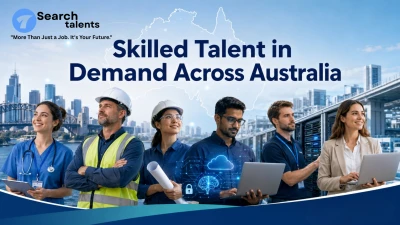
Australia Hiring Watch: Where Skilled Talent Is Needed Right Now
By Meera Nair | 4 June 2026 | 10:00 AM ISTAustralia’s job market is changing quickly. Employers are no longer hiring only to fill empty positions. They are looking for skilled, reliable and job-ready professionals who can support business growth, improve delivery and handle modern workplace demands.Recent labour market updates show that job vacancies remain active across Australia. The Australian Bureau of Statistics reported 337,900 job vacancies in February 2026, showing that employers still need workers across public and private sectors. At the same time, Jobs and Skills Australia continues to track occupation shortage pressures through its latest Occupation Shortage Report.For employers, this means competition for skilled talent is still strong. For job seekers, it means the best opportunities are going to candidates who have the right skills, experience and industry understanding.SearchTalents.co helps connect employers with skilled professionals across Australia by making job opportunities easier to discover and easier to apply for.Why Skilled Talent Is in Demand Across AustraliaAustralia’s workforce needs are being shaped by several major trends. Healthcare demand is rising, construction and infrastructure projects need experienced teams, technology roles are becoming more specialised, and data centre growth is creating demand for engineering, project delivery and operational talent.Many businesses are also becoming more selective. They want candidates who can start quickly, adapt to workplace systems and contribute from day one. This is why job-ready skills, practical experience and industry knowledge matter more than ever.For recruiters and employers, simply posting a job is no longer enough. They need better visibility, stronger candidate reach and platforms that help the right people find the right roles faster.Healthcare and Aged Care Roles Remain ImportantHealthcare continues to be one of Australia’s strongest employment sectors. Roles such as registered nurses, aged care workers, disability support workers, allied health assistants and care coordinators remain important because of population growth, ageing communities and increased service demand.Employers in this sector often need candidates who are not only qualified but also reliable, compassionate and ready to work in structured care environments.Popular roles include:Registered NurseAged Care WorkerDisability Support WorkerHealthcare AssistantAllied Health ProfessionalCare CoordinatorFor SearchTalents.co, healthcare job listings can attract strong interest because many candidates actively search for stable, meaningful and long-term roles in this sector.Construction, Engineering and Infrastructure Jobs Are GrowingConstruction and engineering continue to play a key role in Australia’s workforce demand. Housing, commercial projects, infrastructure upgrades and renewable energy development all require skilled professionals.Employers are looking for project managers, site supervisors, engineers, construction managers, estimators, quantity surveyors and skilled tradespeople. In many cases, delays happen not because projects lack funding, but because companies cannot find the right talent quickly.Useful job categories for SearchTalents.co include:Construction ManagerCivil EngineerSite SupervisorProject ManagerQuantity SurveyorElectrical TechnicianMechanical EngineerProcurement OfficerThese jobs are valuable for both employers and candidates because they connect directly with long-term project delivery needs.Technology and AI Skills Are Becoming EssentialTechnology hiring is also changing. Companies are not only hiring software developers. They are also looking for people who understand AI tools, cloud systems, cybersecurity, automation, data analysis and digital transformation.Businesses want professionals who can use technology to solve real problems. This includes improving customer experience, protecting systems, automating manual tasks and supporting smarter business decisions.High-demand technology roles include:Software DeveloperCyber Security AnalystCloud EngineerData AnalystAI SpecialistAutomation TesterDevOps EngineerIT Support SpecialistFor job seekers, this means technical skills should be supported by communication, problem-solving and business understanding. For employers, it means hiring the right tech talent can directly improve productivity and competitiveness.Data Centre Growth Is Creating New Hiring DemandAustralia’s data centre and AI infrastructure growth is also creating strong demand for specialist talent. The Australian Government has released expectations for data centres and AI infrastructure developers, showing how important this sector has become for national technology growth.Data centre development requires skilled workers across engineering, construction, electrical systems, cooling systems, facilities management and operations. Industry reporting has also highlighted that many data centre operators face challenges finding qualified candidates for open roles.In-demand data centre roles include:Electrical EngineerFacilities ManagerCritical Systems EngineerCommissioning ManagerHVAC TechnicianProject Delivery ManagerFibre Optic TechnicianData Centre Operations SpecialistThis is a strong content and job-listing opportunity for SearchTalents.co because data centre hiring connects construction, engineering, IT and operations together.Accounting, Finance and Business Support Roles Still MatterWhile technology and healthcare get a lot of attention, business support roles remain important across Australia. Companies still need accountants, payroll officers, finance officers, administrators, HR coordinators and customer service professionals.These roles help businesses stay organised, compliant and efficient. Small and medium businesses especially need dependable staff who can manage daily operations and support growth.Useful job categories include:AccountantBookkeeperPayroll OfficerFinance OfficerOffice AdministratorHR CoordinatorCustomer Support OfficerBusiness AnalystThese jobs are suitable for regular posting on SearchTalents.co because they appeal to a wide range of candidates across industries.What Employers Should Do NowEmployers need to move faster and communicate clearly. Skilled candidates often compare multiple opportunities before applying. A strong job post should include the role title, location, salary range, responsibilities, required skills and benefits.Employers should also avoid vague descriptions. Candidates want to know what the company offers, what the work environment is like and how quickly the hiring process will move.SearchTalents.co can help employers improve job visibility by allowing them to post roles where skilled professionals are actively searching for new opportunities.What Job Seekers Should Focus OnJob seekers should focus on skills that match real employer demand. A strong resume, updated profile and clear career direction can improve the chance of getting noticed.Candidates should also avoid applying randomly to every job. Instead, they should apply for roles where their skills, experience and location match the employer’s needs.Job seekers can use SearchTalents.co to explore relevant opportunities across Australia and apply for jobs that match their career goals.Final ThoughtsAustralia’s hiring market is active, but it is also more competitive and skills-focused. Healthcare, construction, engineering, technology, data centres, accounting and business support roles are all creating opportunities for skilled professionals.For employers, the challenge is finding the right candidates faster. For job seekers, the challenge is showing the right skills clearly.SearchTalents.co helps bridge this gap by making job opportunities more visible and helping employers connect with skilled talent across Australia.(1) Australia recorded 337,900 job vacancies in February 2026, showing that hiring demand remains active across the countryhttps://www.abs.gov.au/statistics/labour/jobs/job-vacancies-australia/latest-release(2) Jobs and Skills Australia’s Occupation Shortage List shows that many skilled roles are still in demand across Australiahttps://www.jobsandskills.gov.au/data/occupation-shortage/occupation-shortage-list(3) Accountants, cyber security specialists, engineers, software developers and office support roles are among Australia’s in-demand jobshttps://www.hays.com.au/industry-insights/jobs-report(4) AI, automation and digital skills are changing workforce trends and increasing the need for adaptable talent in Australiahttps://www.hays.com.au/blog/insights/workforce-trends(5) Australia’s data centre and AI infrastructure growth is creating future demand for technology, engineering and operational talenthttps://www.industry.gov.au/publications/expectations-data-centres-and-ai-infrastructure-developers(6) Australia’s Skilled Occupation List highlights the occupations needed to support the country’s labour market and migration workforce needshttps://immi.homeaffairs.gov.au/visas/working-in-australia/skill-occupation-list#AustraliaJobs #HiringAustralia #SearchTalents #SkilledTalent #TechJobs #HealthcareJobs #ConstructionJobs #EngineeringJobs #DataCentreJobs #RecruitmentAustralia
04-Jun-2026
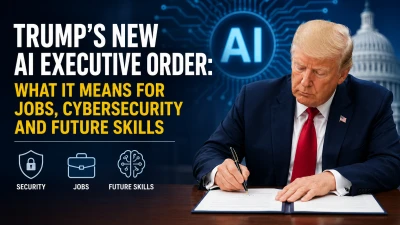
Trump’s New AI Executive Order: What It Means for Jobs, Cybersecurity and Future Skills
Artificial intelligence is no longer just a technology trend. It is now becoming a major part of national security, business strategy, cybersecurity and workforce planning.U.S. President Donald Trump has signed a new executive order that creates a voluntary framework for leading AI companies to share advanced AI models with the federal government before public release. The order allows the U.S. government to review certain frontier AI models for national security and cybersecurity risks for up to 30 days before they are widely launched.This development shows how seriously governments are now taking AI safety. For students, job seekers, recruiters and employers, the message is clear: AI skills alone may not be enough in the future. The job market will also need people who understand AI safety, cybersecurity, compliance, data protection and responsible technology use.Why This AI Executive Order MattersThe executive order is focused on advanced AI models, sometimes called frontier models. These are powerful AI systems that can support coding, research, cybersecurity testing, automation, data analysis and decision-making.The order does not create a mandatory approval system for every AI model. Instead, it creates a voluntary process where leading AI developers can provide early access to the government for security review. According to AP News, participation by AI developers is voluntary, and the review window is expected to be up to 30 days.The reason behind this move is simple: AI systems are becoming powerful enough to create both opportunities and risks. They can help businesses become more productive, but they can also be misused for cyberattacks, fraud, misinformation, software vulnerability discovery and attacks on critical infrastructure.That is why AI is now becoming a matter of both innovation and security.AI Is Creating a New Type of Job MarketFor many years, job seekers were told to learn digital skills, coding, data analysis and software tools. Today, the skills conversation is changing again.The future job market will need professionals who can work with AI responsibly. This includes people who can test AI systems, protect data, secure digital platforms, follow compliance rules and help companies use AI safely.The World Economic Forum’s Future of Jobs Report says AI and big data are among the fastest-growing skills, followed closely by networks, cybersecurity and technology literacy. The report also says technology-related roles such as AI and machine learning specialists, big data specialists and software developers are among the fastest-growing roles by percentage.This means AI is not only changing tech companies. It is changing hiring across finance, healthcare, education, government, retail, logistics, manufacturing and professional services.Cybersecurity Skills Will Become More ImportantOne of the biggest lessons from this executive order is the growing importance of cybersecurity.As AI models become more advanced, companies will need more cybersecurity experts who understand AI-powered risks. These risks can include phishing attacks, automated hacking attempts, data leaks, deepfake fraud, model misuse and threats to business systems.CompTIA’s State of the Tech Workforce report says tech occupations are expected to grow faster than the overall workforce, with strong growth expected for roles such as data scientists, cybersecurity analysts, software developers, IT directors and software QA testers. The report also notes that AI skills hiring reached nearly 275,000 active job postings in January 2026.For job seekers, this means cybersecurity is no longer a narrow technical field. It is becoming a core business skill.Even non-technical professionals can benefit from understanding basic cybersecurity, data privacy and responsible AI use. Employers increasingly need people who can work safely with digital tools, protect company information and understand the risks of using AI in daily operations.What Students Should Learn from This NewsStudents should not look at this news only as a political update. It is a career signal.AI is becoming part of almost every industry. Students who start learning AI tools, data basics, cybersecurity awareness and digital ethics will be better prepared for future job opportunities.Important skills for students include:Basic AI tool usagePrompt writing and AI-assisted researchCybersecurity awarenessData privacy basicsDigital communicationAnalytical thinkingProblem-solvingTechnology literacyEthical use of AIStudents do not need to become AI engineers immediately. But they should understand how AI is changing work, hiring and business decisions.What Job Seekers Should LearnFor job seekers, this news shows that employers may start looking for candidates who can combine technical ability with responsibility.In the coming years, companies may prefer candidates who understand not just how to use AI, but how to use it safely and professionally.For example, a marketing professional using AI should understand content accuracy and copyright risk. A finance professional should understand data privacy. A software developer should understand secure coding. A recruiter should understand fair and responsible AI use in hiring.This is where job seekers can stand out.Instead of writing only “AI tools knowledge” on a resume, candidates should show practical examples such as:Used AI tools to improve productivityFollowed data privacy practicesCreated AI-assisted reports with human reviewWorked with secure digital systemsCompleted basic cybersecurity or AI safety trainingUsed AI ethically in research, writing or analysisThese examples can make a candidate look more job-ready.What Employers Should LearnEmployers should also pay attention to this trend. AI adoption is growing fast, but many companies are still not training their teams properly.Hiring the right talent will become more important as AI tools enter business operations. Companies will need people who can manage AI tools, protect sensitive information, follow compliance requirements and reduce digital risk.This is not only a concern for large technology companies. Small and medium businesses also need AI-aware employees. A single mistake with customer data, passwords, financial records or AI-generated content can create serious business problems.Employers should start looking for candidates with a mix of:AI awarenessCybersecurity understandingData handling skillsCompliance mindsetCritical thinkingAdaptabilityCommunication skillsThe best hiring strategy will not be only about finding people with degrees. It will be about finding people who can learn, adapt and work responsibly in an AI-powered workplace.Why This Matters for SearchTalentsAt SearchTalents.co, we believe the hiring market is moving toward skills-based and future-ready recruitment.This AI executive order is another reminder that employers need smarter ways to find talent, and job seekers need better ways to show their skills. The future of hiring will not depend only on resumes. It will depend on practical skills, verified experience, adaptability and digital readiness.SearchTalents.co helps connect employers with skilled candidates who are ready for modern workplace needs. As AI continues to change the job market, platforms like SearchTalents can support employers, recruiters and job seekers by making talent discovery faster, smarter and more relevant.Future Careers That May Grow Because of AI RegulationAs governments and companies focus more on AI safety, several career areas may become more valuable:AI Safety AnalystCybersecurity AnalystData Privacy OfficerAI Governance SpecialistCompliance OfficerMachine Learning EngineerRisk AnalystCloud Security SpecialistSoftware Security TesterDigital Transformation ConsultantAI Policy ResearcherIT Audit SpecialistThese roles show that AI is not only creating jobs for coders. It is also creating opportunities for people in law, compliance, HR, business, education, governance and operations.Final ThoughtsTrump’s AI executive order is a major signal for the global job market. It shows that AI is moving from simple workplace automation to a serious area of security, governance and policy.For students, this is the right time to start learning AI and cybersecurity basics. For job seekers, this is the right time to upgrade skills and show practical digital ability. For employers, this is the right time to hire people who can work with AI responsibly.AI will continue to change how companies operate, how governments regulate technology and how people build careers. Those who understand this shift early will be better prepared for the future of work.ReferencesThe White House – Promoting Advanced Artificial Intelligence Innovation and SecurityOfficial executive order source for AI innovation, security, cybersecurity standards and government coordination. Reuters – Trump administration to ask U.S. AI firms to voluntarily submit models for cybersecurity testsUsed for voluntary submission, cybersecurity testing and pre-release government review details. AP News – Trump signs an executive order that invites vetting of top AI models for national security risksUsed for 30-day review, national security risk and voluntary participation details. The Guardian – Trump signs executive order seeking early access to new AI releasesUsed for early access, AI model review and cybersecurity risk context. World Economic Forum – Future of Jobs ReportUsed for future skills, AI, big data, technology literacy and job-market transformation points. CompTIA – Official WebsiteUsed as a technology workforce and IT skills reference source.#AIJobs #CybersecurityCareers #FutureSkills #TechJobs #AISafety #AIRegulation #DigitalSkills #AIHiring #DataPrivacy #AIGovernance #ComplianceJobs #JobSeekers #Employers #SearchTalents #FutureOfWork
03-Jun-2026