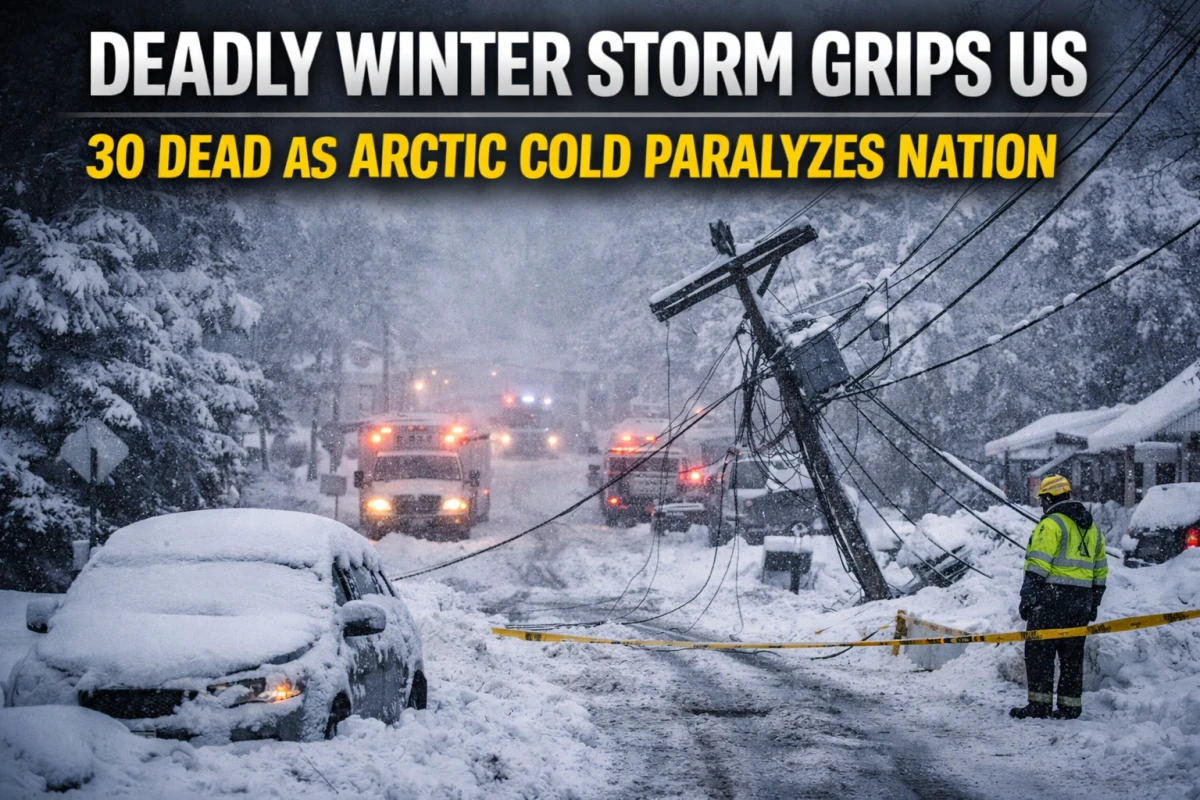

A massive winter storm sweeping across the United States has left at least 30 people dead, crippled power infrastructure, and plunged millions into days of freezing temperatures, officials confirmed on Monday.
More than 560,000 homes and businesses remained without electricity Monday evening, according to outage tracking data, as bitter cold and heavy snow continued to paralyze large parts of the country. From the South to New England, communities faced treacherous conditions with little relief in sight.
The storm blanketed a 1,300 mile stretch from Arkansas to New England with more than a foot of snow in several regions. Northern areas near Pittsburgh recorded snowfall up to 20 inches, while wind chills plunged to minus 25 degrees Fahrenheit. Traffic ground to a halt, flights were canceled en masse, and schools across multiple states shut down.
The National Weather Service warned that the extreme cold impacting nearly two thirds of the United States is expected to persist due to a fresh surge of Arctic air. Forecasters cautioned that another winter system could strike the East Coast later this week.
Authorities reported deaths linked to hypothermia, accidents, and storm related incidents. In New York City, eight people were found dead outdoors over the weekend as temperatures dropped sharply. Two individuals were fatally struck by snowplows in Massachusetts and Ohio. Teenagers died in sledding accidents in Arkansas and Texas, while a woman in Kansas was found dead in the snow after leaving a bar.
Additional fatalities were reported in Tennessee, Louisiana, Pennsylvania, Mississippi, New Jersey, South Carolina, and Kentucky. Investigations into several deaths remain ongoing.
The South bore the brunt of power outages after freezing rain snapped trees and power lines. Northern Mississippi and parts of Tennessee suffered widespread damage, with officials warning that restoring electricity could take several days.
Mississippi Governor Tate Reeves described the storm as the worst ice event in the state since 1994. Emergency crews distributed cots, blankets, water, and generators to warming shelters as residents struggled through freezing nights.
In Oxford, Mississippi, fallen trees and ice damage left neighborhoods resembling disaster zones. The University of Mississippi canceled classes for the entire week as students sheltered without power.
Air travel was severely disrupted, with more than 12,000 flight delays or cancellations recorded on Monday. Nearly half of all US flights were canceled on Sunday, marking the highest single day cancellation rate since the COVID-19 pandemic. Major hubs such as Dallas Fort Worth International Airport were heavily impacted, stranding passengers and flight crews across the country.
Hotels across affected regions filled rapidly as families sought refuge from cold, powerless homes. In Nashville, residents booked rooms to preserve food, protect infants, and escape unsafe conditions. Officials urged people to check on vulnerable neighbors and avoid unnecessary travel.
Meteorologists said light to moderate snow could continue in parts of New England, while dangerous cold temperatures are expected to linger nationwide.
Leadership Lessons for Candidates: What This Crisis Teaches
Extreme events expose leadership failures and leadership strengths. Candidates and professionals can draw clear lessons from this crisis.
Leaders who plan only for average conditions fail in real crises. Strong leaders build buffers, contingency plans, and emergency protocols long before they are needed.
Clear, timely information from authorities and employers matters. Silence, confusion, or delayed messaging increases risk and panic. Good leaders communicate early and often.
Power grids, transport systems, and public services do not fail randomly. Long term neglect and short term cost cutting show up during disasters. Leadership means investing ahead of headlines.
Real leadership is not speeches. It is warming centers, emergency aid, flexible work policies, and support for the vulnerable. Action defines leadership, not words.
How leaders respond when systems break is remembered long after the storm passes. Candidates should study these moments because future employers will expect the same decisiveness under pressure.
Employers value professionals who can stay calm, think clearly, and act responsibly in high pressure situations. Crises test judgment, accountability, and resilience. These are not optional skills. They define long term career growth.
#WinterEmergency #SevereWeather #StormImpact #NationalEmergency #WeatherUpdate #USInfrastructure #EnergyCrisis #PowerGrid #FlightDisruptions #TravelAlert #ColdWeatherSafety #EmergencyPreparedness